
A Multi-scale Self-supervision Method for Improving Cell Nuclei Segmentation in Pathological Tissues
Nuclei detection and segmentation in histopathological images is a prerequisite step for quantitative analysis including morphological shape and size to help in identifying cancer prognosis. Digital pathology field aims to improve the quality of cancer diagnosis and has helped pathologists to reduce their efforts and time. Different deep learning architectures are widely used recently in Digital pathology field, yielding promising results in different problems. However, Deep convolutional neural networks (CNNs) need a large subset of labelled data that are not easily available all the time in
Smart Saliency Detection for Prosthetic Vision
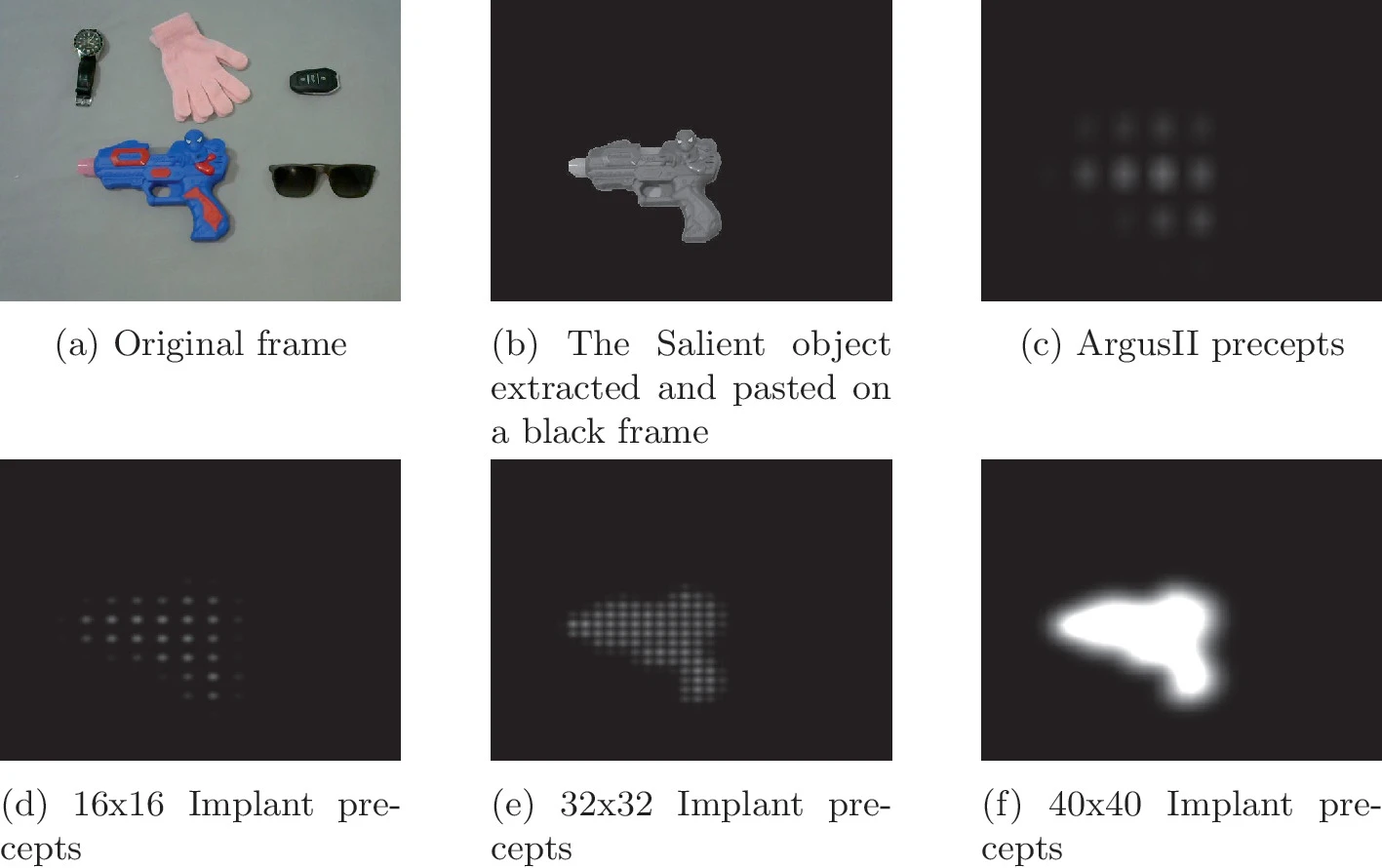
People with visual impairments often have difficulty locating misplaced objects. This can be a major barrier to their independence and quality of life. Retinal prostheses can restore some vision to people with severe vision loss. We introduce a novel real-time system for locating any misplaced objects for people with visual impairments using retinal prostheses. The system combines One For All (OFA) for Visual Grounding and Google Speech Recognition to identify the object to be located. It then uses an image processing technique called grabCut to extract the object from the background to
Clay chips and beads capture in situ barley root microbiota and facilitate in vitro long-term preservation of microbial strains
Capturing the diverse microbiota from healthy and/or stress resilient plants for further preservation and transfer to unproductive and pathogen overloaded soils, might be a tool to restore disturbed plant-microbe interactions. Here, we introduce Aswan Pink Clay as a low-cost technology for capturing and storing the living root microbiota. Clay chips were incorporated into the growth milieu of barley plants and developed under gnotobiotic conditions, to capture and host the rhizospheric microbiota. Afterward, it was tested by both a culture-independent (16S rRNA gene metabarcoding) and
Genomic landscape of hepatocellular carcinoma in Egyptian patients by whole exome sequencing
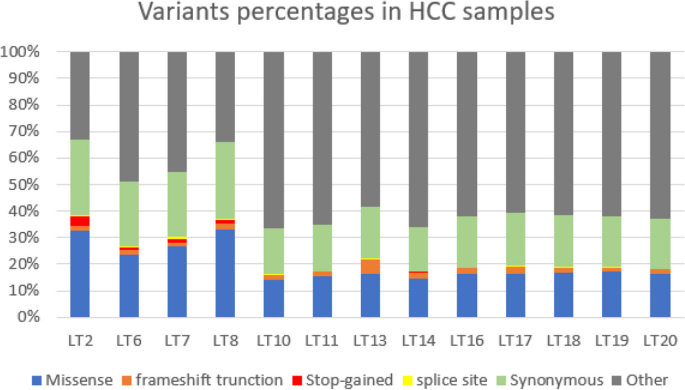
Background: Hepatocellular carcinoma (HCC) is the most common primary liver cancer. Chronic hepatitis and liver cirrhosis lead to accumulation of genetic alterations driving HCC pathogenesis. This study is designed to explore genomic landscape of HCC in Egyptian patients by whole exome sequencing. Methods: Whole exome sequencing using Ion Torrent was done on 13 HCC patients, who underwent surgical intervention (7 patients underwent living donor liver transplantation (LDLT) and 6 patients had surgical resection}. Results: Mutational signature was mostly S1, S5, S6, and S12 in HCC. Analysis of
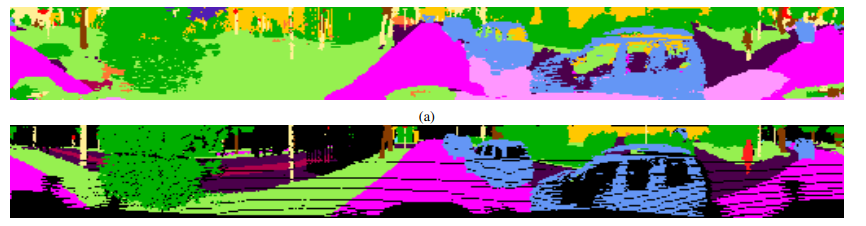
Improved Semantic Segmentation of Low-Resolution 3D Point Clouds Using Supervised Domain Adaptation
One of the key challenges in applying deep learning to solve real-life problems is the lack of large annotated datasets. Furthermore, for a deep learning model to perform well on the test set, all samples in the training and test sets should be independent and identically distributed (i.i.d.), which means that test samples should be similar to the samples that were used to train the model. In many cases, however, the underlying training and test set distributions are different. In such cases, it is common to adapt the test samples by transforming them to their equivalent counterparts in the
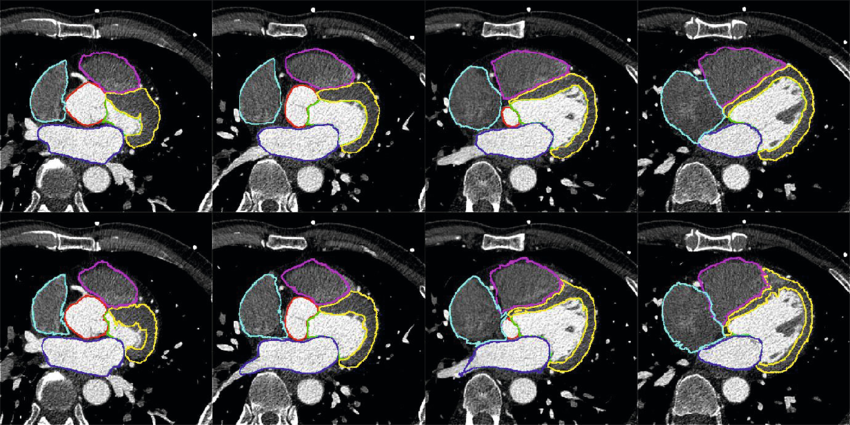
Myocardial segmentation using constrained multi-seeded region growing
Multi-slice short-axis acquisitions of the left ventricle are fundamental for estimating the volume and mass of the left ventricle in cardiac MRI scans. Manual segmentation of the myocardium in all time frames per each cross-section is a cumbersome task. Therefore, automatic myocardium segmentation methods are essential for cardiac functional analysis. Region growing has been proposed to segment the myocardium. Although the technique is simple and fast, non uniform intensity and low-contrast interfaces of the myocardium are major challenges of the technique that limit its use in myocardial