
A Context Integrated Model for Multi-label Emotion Detection
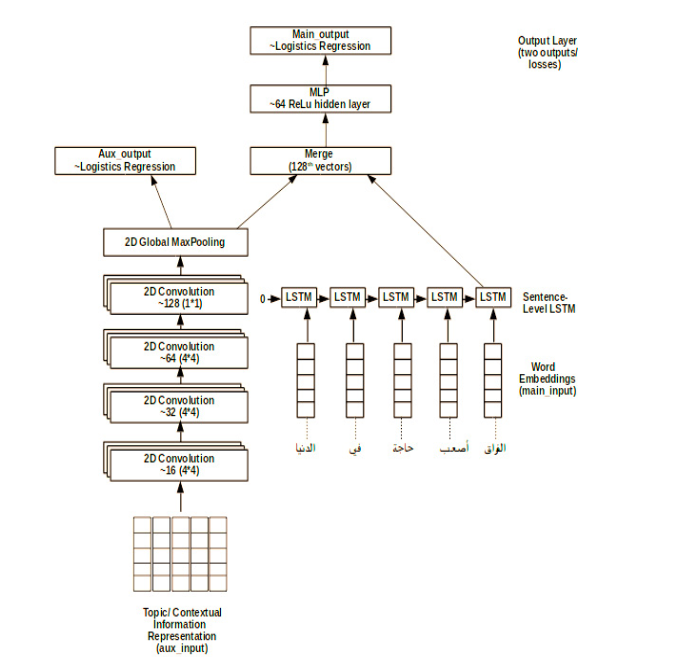
This paper explores the impact of taking the environment within which a tweet is made, on the task of analyzing sentiment orientations of tweets produced by people in the same community. The paper proposes C-GRU (Context-aware Gated Recurrent Units), which extracts the contextual information (topics) from tweets and uses them as an extra layer to determine sentiments conveyed by the tweet. The proposed architecture learns direct co-relations between such information and the task's predication. The multi-modal model combines both outputs learnt (from topics and sentences) by learning the
Decoding arm kinematics from EMG signals using Kalman filter
Myoelectric control of prosthetic arms provides a new hope for providing naturalistic movements to amputees. Extensive work has been made in recent years to use Electromyography (EMG) signals to enhance the operation of prosthetic arms. In this paper, we propose an EMG Kalman filter-based model, where we identify the relationship between the joint angles and recorded EMG signals. EMG signals were recorded from biceps and triceps muscles and used to train a Kalman filter decoder. We assessed the performance of the decoder by computing the correlation and the normalized root mean-square error
A new static-based framework for ransomware detection
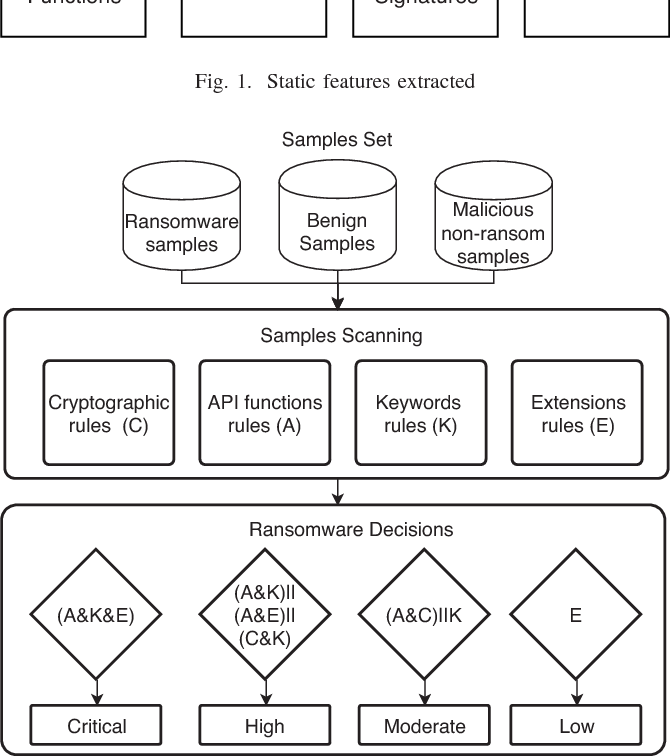
Recently, ransomware attacks are on the rise hitting critical infrastructures and organizations globally. Ransomware uses advanced encryption techniques to encrypt important files on the targeted computer, then it requests payment to decrypt the encrypted files again. Therefore, the detection and prevention of ransomware attacks represent major challenges for security researchers. This research proposes a novel static-based rules ransomware detection framework. The decision rules of the proposed framework are based on static features extracted from the ransomware files. When scanned file
The H3ABioNet helpdesk: An online bioinformatics resource, enhancing Africa's capacity for genomics research
Background: Currently, formal mechanisms for bioinformatics support are limited. The H3Africa Bioinformatics Network has implemented a public and freely available Helpdesk (HD), which provides generic bioinformatics support to researchers through an online ticketing platform. The following article reports on the H3ABioNet HD (H3A-HD)'s development, outlining its design, management, usage and evaluation framework, as well as the lessons learned through implementation. Results: The H3A-HD evaluated using automatically generated usage logs, user feedback and qualitative ticket evaluation
The overexpression of DNA repair genes in invasive ductal and lobular breast carcinomas: Insights on individual variations and precision medicine
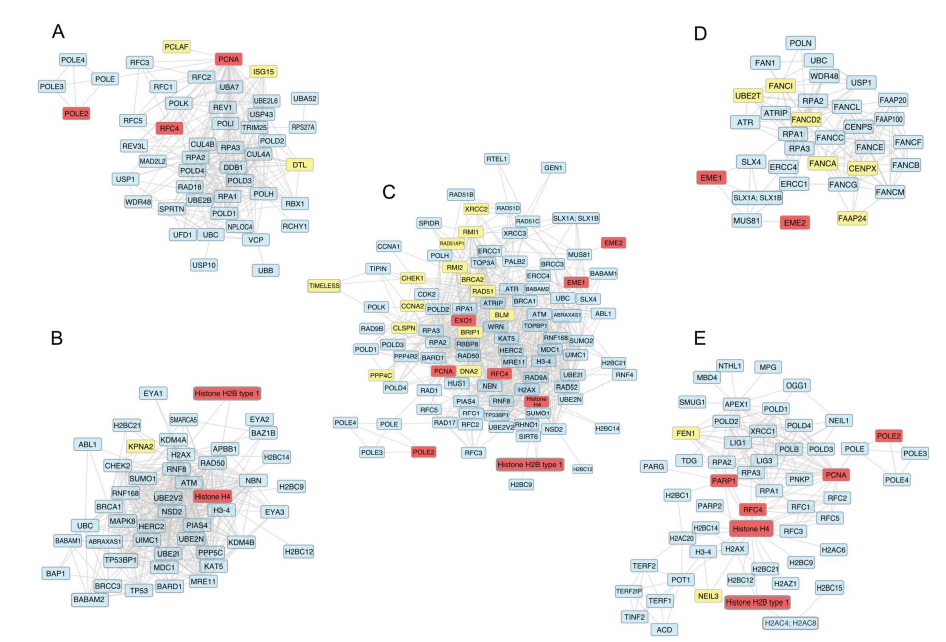
In the era of precision medicine, analyzing the transcriptomic profile of patients is essential to tailor the appropriate therapy. In this study, we explored transcriptional differences between two invasive breast cancer subtypes; infiltrating ductal carcinoma (IDC) and lobular carcinoma (LC) using RNA-Seq data deposited in the TCGA-BRCA project. We revealed 3854 differentially expressed genes between normal ductal tissues and IDC. In addition, IDC to LC comparison resulted in 663 differentially expressed genes. We then focused on DNA repair genes because of their known effects on patients'
Managing Delivery of Safeguarding Substances as a Mitigation against Outbreaks of Pandemics
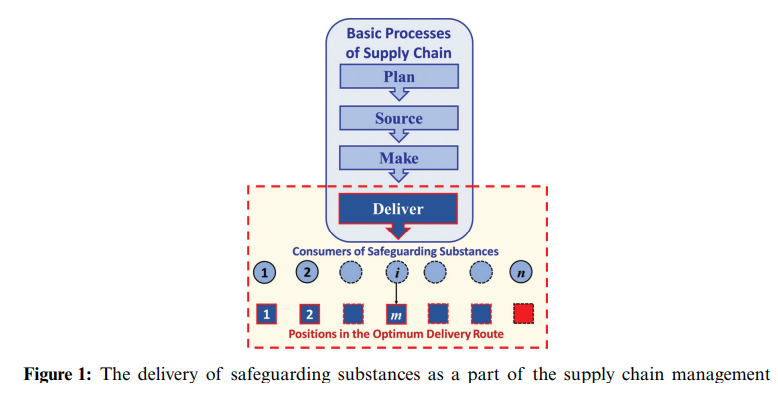
The optimum delivery of safeguarding substances is a major part of supply chain management and a crucial issue in the mitigation against the outbreak of pandemics. A problem arises for a decision maker who wants to optimally choose a subset of candidate consumers to maximize the distributed quantities of the needed safeguarding substances within a specic time period. A nonlinear binary mathematical programming model for the problem is formulated. The decision variables are binary ones that represent whether to choose a specic consumer, and design constraints are formulated to keep track of the
Robust autonomous visual detection and tracking of moving targets in UAV imagery
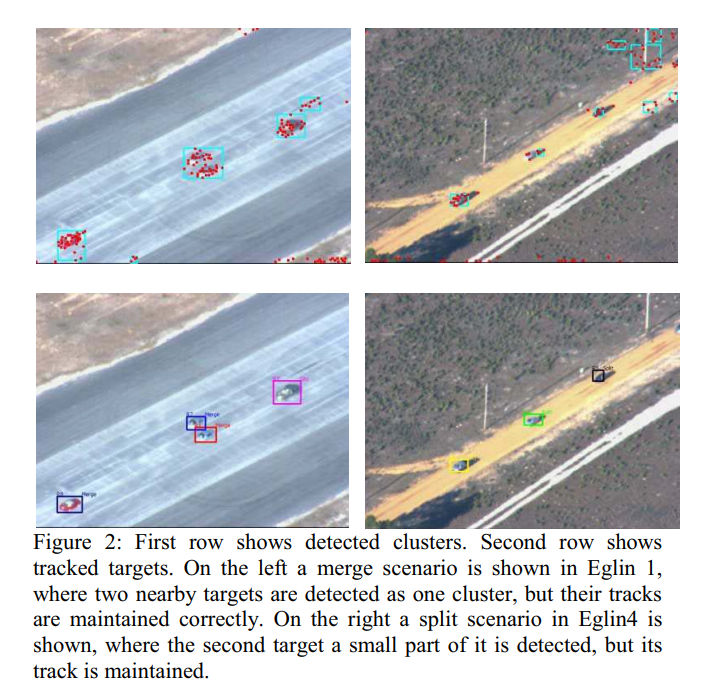
The use of Unmanned Aerial Vehicles (UAVs) for reconnaissance and surveillance applications has been steadily growing over the past few years. The operations of such largely autonomous systems rely primarily on the automatic detection and tracking of targets of interest. This paper presents a novel automatic multiple moving target detection and tracking framework that executes in real-time and is suitable for UAV imagery. The framework is based on image feature processing and projective geometry and is carried out on the following stages. First, outlier image features are computed with least
Scale-adaptive object tracking with diverse ensembles
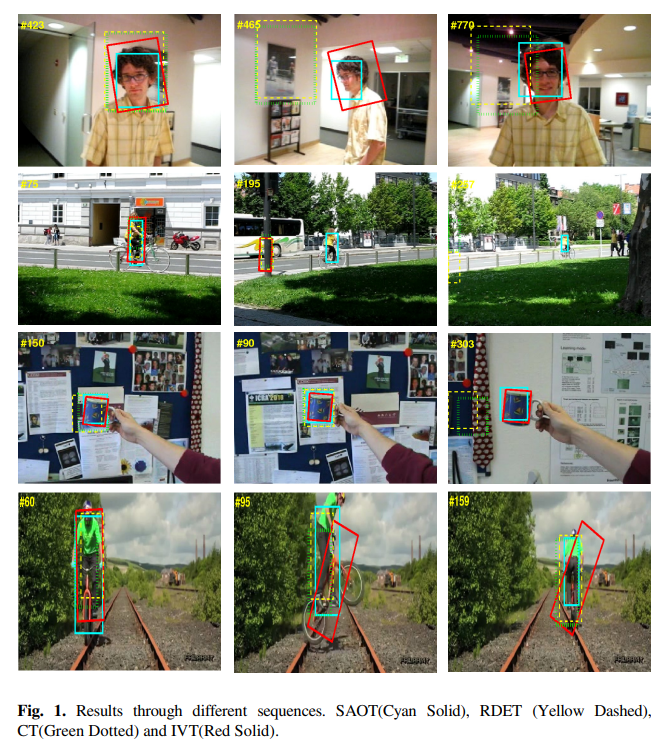
Tracking by detection techniques have recently been gaining increased attention in visual object tracking due to their promising results in applications such as robotics, surveillance, traffic monitoring, to name a few. These techniques often employ semi-supervised appearance model where a set of samples are continuously extracted around the object to train a discriminant classifier between the object and the background whereas real-time performance is attained by using reduced object representations as in the case of the compressive tracking algorithm. However, because they rely on self

Towards cloud customers self-monitoring and availability-monitoring
As an attractive IT environment, Cloud Computing represents a good enough paradigm which governments, national entities, small/medium/large organizations and companies want to migrate to. In fact, outsourcing IT related services to Cloud technology, needs monitoring and controlling mechanisms. However, Cloud Customers cannot fully rely on the Cloud Providers measurements, reports and figures. In this book chapter, we cover the two Cloud Computing operation sides. For the first operation side, we provide advices and guidelines for Cloud layers which can be under Cloud Customer control, to allow
Vision capabilities for a humanoid robot tutoring biology
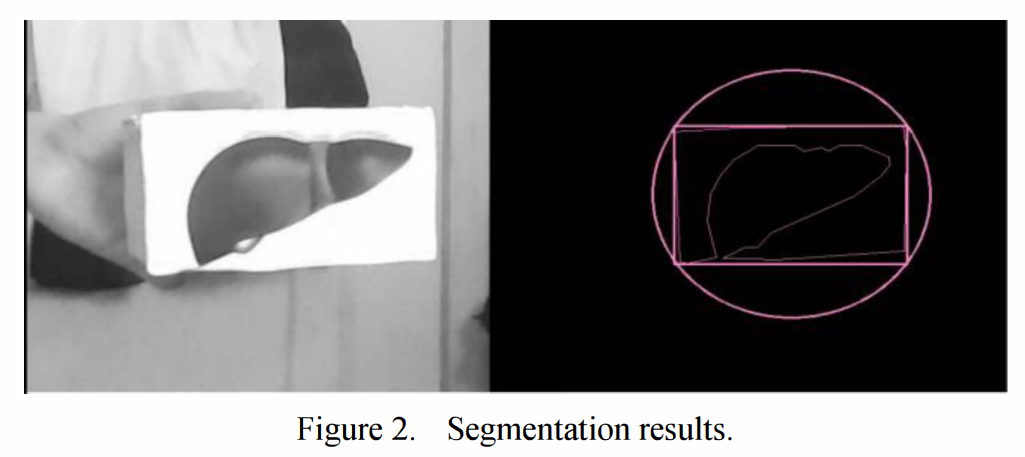
Robots are expected to be the future solution in various fields. One of these fields is education. Teachers, students and robots have to work together to make this assumption true. For this, robots must have the adequate capabilities that can help them succeed. Vision of the robot is an essential tool that the robot uses to perform several tasks. Hence, it has to be taken into consideration, the steps and the expectations for this robot vision system to surpass at least the very basic skills. Detection, recognition, and localization are the basic skills that we are implementing in our