

Blockchain Application on Big Data Security
In recent years, advances in technology in several industries have resulted in massive data collections on the web. It raises worries about large data security and protection. The advent of Blockchain technology has caused a revolution in the security field for different applications. The distributed ledger is stored on each Blockchain node, which enhances security and data transparency. On the Blockchain network, illegal users are not authorized to undertake any fault transactions. In this article, we will discuss how Blockchain may be employed to secure the big data. We explain the problems

Topic Modeling on Arabic Language Dataset: Comparative Study
Topic modeling automatically infers the hidden themes in a collection of documents. There are several developed techniques for topic modeling, which are broadly categorized into Algebraic, Probabilistic and Neural. In this paper, we use an Arabic dataset to experiment and compare six models (LDA, NMF, CTM, ETM, and two Bertopic variants). The comparison used evaluation metrics of topic coherence, diversity, and computational cost. The results show that among all the presented models, the neural BERTopic model with Roberta-based sentence transformer achieved the highest coherence score (0.1147)
Semi-Supervised Machine Learning Applications in RAN Design: Towards Data-Driven Next Generation Cellular Networks
The explosive growth of mobile internet services and demand for data connectivity boosts the innovation and development in Radio Access Network (RAN) to define how next generation mobile networks will look like. Continuous improvement in existing RAN is crucial to meet very strict speed and latency requirements by different mobile applications with minimum investments. Exploiting the advancement in Machine Learning and AI-driven algorithms is essential to tackle these challenges in different functions within the RAN domain. In this paper we surveyed how to leverage different clustering
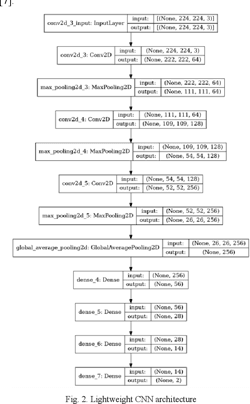
Light-Weight Food/Non-Food Classifier for Real-Time Applications
Today, automatic food/non-food classification became extremely important for many real-time applications, specifically since the pandemic of the COVID-19 virus. Such that the 'no food policy' now became applied more than ever to help decrease the spread of the COVID-19 virus. Consequently, many studies used deep neural networks for the food/non-food classification task, yet these deep neural networks were computationally expensive. As a result, in this paper, a lightweight Convolution Neural Network (CNN) is proposed and put into use for classifying foods and non-foods. Compared to prior

Gold Price Prediction using Sentiment Analysis
Gold is one of the valuable materials that is used for funding trading purchases. Nowadays, more investors are interested in gold investments due to the sudden increase in gold prices. However, transactions involving gold are risky, the price of gold fluctuates wildly due to the unpredictability of the gold market. Hence, there is a need for the development of gold price prediction scheme to assist and support investors, marketers, and financial institutions in making effective economic and monetary decisions. This paper analyzes the correlation between gold price movements and sentiments of
Design and Implementation of a Dockerized, Cross Platform, Multi-Purpose Cryptography as a Service Framework Featuring Scalability, Extendibility and Ease of Integration
Following cybersecurity st and ards nowadays is becoming one of the highest priorities to the digital specialists. Due to the global direction to apply digital transformation, data security is a concern. It becomes crucial to ensure data confidentiality, integrity, and availability whether while transmitting, at rest or even while processing it. The difficulty being faced by organizations, is the challenge of applying the needed security measures. Also, implementing, and maintaining the cryptographic algorithms that ensure the wellness of the data encryption. Having a crypto library or a
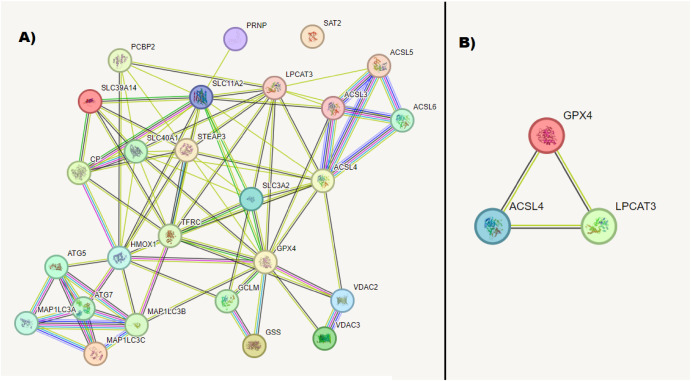
Innovative approaches to metabolic dysfunction-associated steatohepatitis diagnosis and stratification
The global rise in Metabolic dysfunction-associated steatotic liver disease (MASLD)/Metabolic dysfunction-associated steatohepatitis (MASH) highlights the urgent necessity for noninvasive biomarkers to detect these conditions early. To address this, we endeavored to construct a diagnostic model for MASLD/MASH using a combination of bioinformatics, molecular/biochemical data, and machine learning techniques. Initially, bioinformatics analysis was employed to identify RNA molecules associated with MASLD/MASH pathogenesis and enriched in ferroptosis and exophagy. This analysis unveiled specific
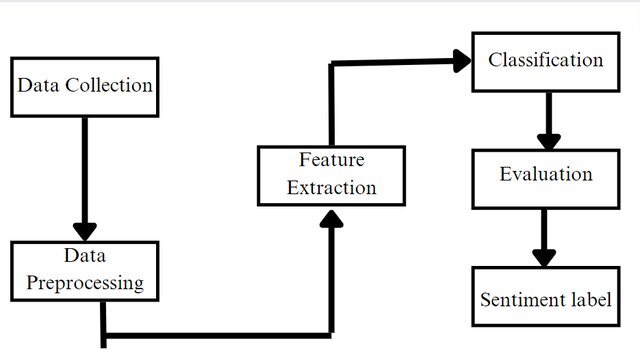
Sentiment Analysis On Arabic Companies Reviews
This study introduces an innovative approach to sentiment analysis, specifically tailored for the Arabic language, a domain that poses unique challenges due to its complex morphology and diverse dialects. Utilizing a substantial dataset of over 108,000 reviews related to Arabic companies, our primary objective was to develop a robust and reliable sentiment scoring system that caters to the intricacies of the Arabic language, aimed at assisting businesses in understanding customer sentiments more effectively.Our methodology encompassed an extensive preprocessing phase, crucial for preparing the
Machine Learning-Based Prediction of Backhaul Capacity Requirements for Cellular Networks
The accurate prediction of the required backhaul transmission capacity for cellular networks is critical to ensure efficient and reliable network performance, especially with the increasing demand for high-speed data services and the introduction of new radio technologies. This paper presents a framework for predicting the required capacity of backhaul networks based on the base stations' radio resources utilization and serving radio conditions. The proposed framework utilizes machine learning techniques to accurately estimate the required backhaul capacity by analyzing the base stations'
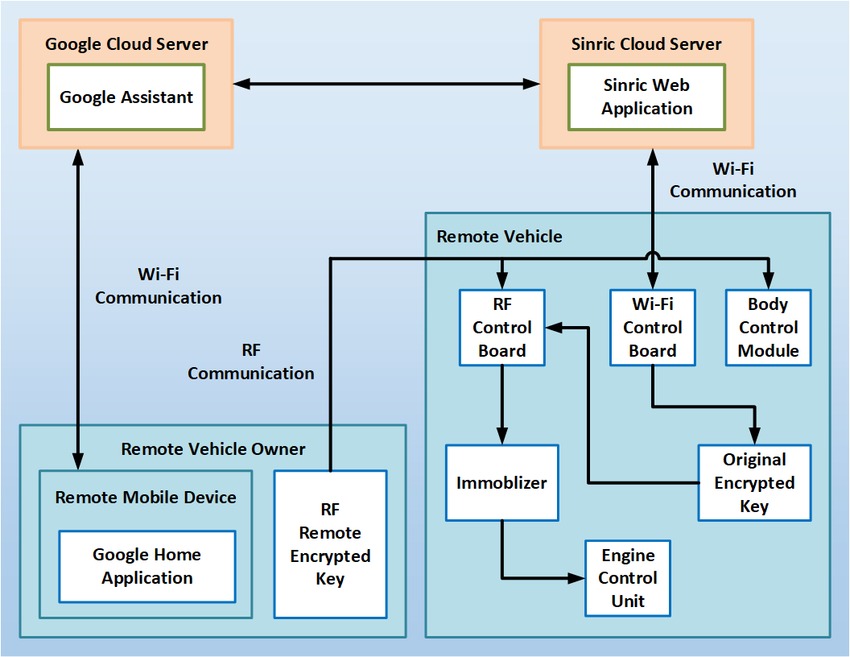
A Reliable Secure Architecture for Remote Wireless Controlling of Vehicle's Internal Systems based on Internet of Vehicles using RF and Wi-Fi
Internet of Vehicles is considered one of the most unprecedented outputs of the Internet of Things. No one has realized or even expected the rapidly-growing revolution regarding autonomous connected vehicles. Nowadays, Internet of Vehicles is massively progressing from Vehicular Ad-Hoc Networks as a huge futuristic research and development discipline. This paper proposes a novel reliable and secure architecture for ubiquitously controlling remote connected cars' internal systems, such as engine, doors' locks, sunroof, horn, windows' and lights' control systems. The main contribution is that