
Deep convolutional encoder-decoders with aggregated multi-resolution skip connections for skin lesion segmentation
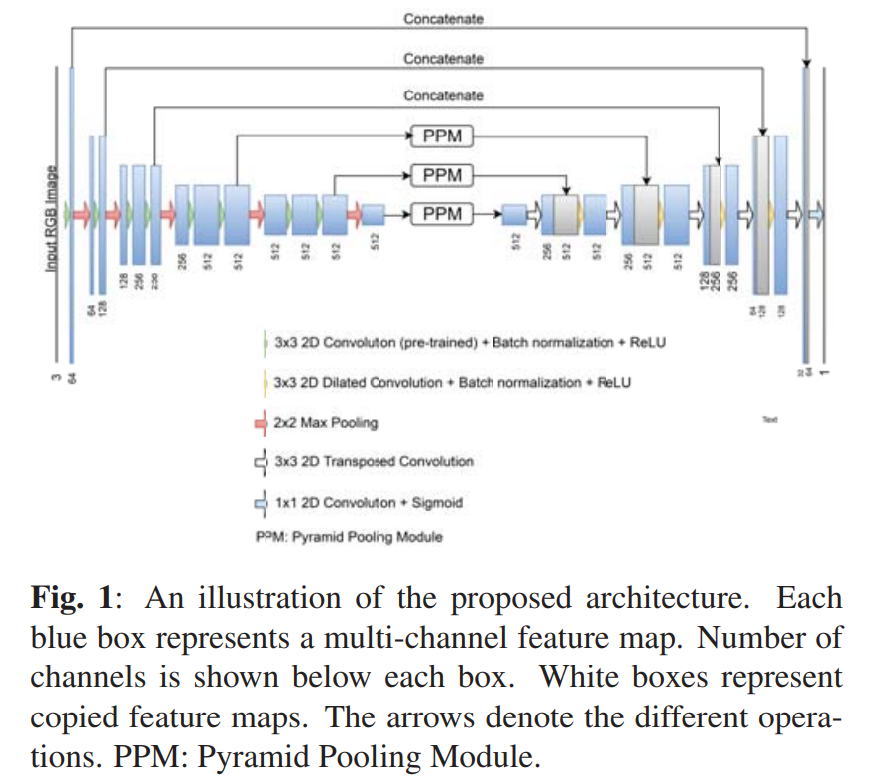
The prevalence of skin melanoma is rapidly increasing as well as the recorded death cases of its patients. Automatic image segmentation tools play an important role in providing standardized computer-assisted analysis for skin melanoma patients. Current state-of-the-art segmentation methods are based on fully convolutional neural networks, which utilize an encoder-decoder approach. However, these methods produce coarse segmentation masks due to the loss of location information during the encoding layers. Inspired by Pyramid Scene Parsing Network (PSP-Net), we propose an encoder-decoder model
Light-Weight Localization and Scale-Independent Multi-gate UNET Segmentation of Left and Right Ventricles in MRI Images
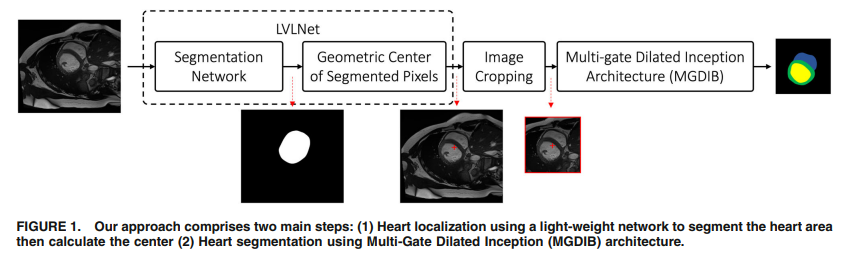
Purpose: Heart segmentation in cardiac magnetic resonance images is heavily used during the assessment of left ventricle global function. Automation of the segmentation is crucial to standardize the analysis. This study aims at developing a CNN-based framework to aid the clinical measurements of the left ventricle and right ventricle in cardiac magnetic resonance images. Methods: We propose a fully automated framework for localization and segmentation of the left ventricle and right ventricle in both short- and long-axis views from cardiac magnetic resonance images. The localization module
Potential probiotics for viral triggered type 2 diabetes
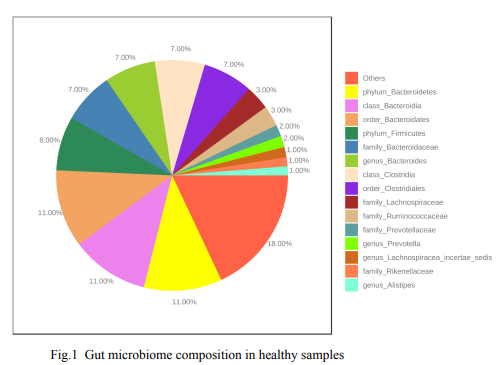
The scientific literature is full of studies that provide evidence highlighting the role of microbiome in type 2 diabetes (T2D) development and progression, still, discrepancies are evident when studying the link between certain taxonomic groupings and T2D, thus, eliminating the discrepancy between such studies is crucial to build on a robust systematic approach to identify the possible linkage between such taxonomic groups and diabetes development and progression, hence developing a potential treatment. Here we aimed to use a publicly available data set of gut and nares microbiome of
Benchmarking of Antimicrobial Resistance Gene Detection Tools in Assembled Bacterial Whole Genomes
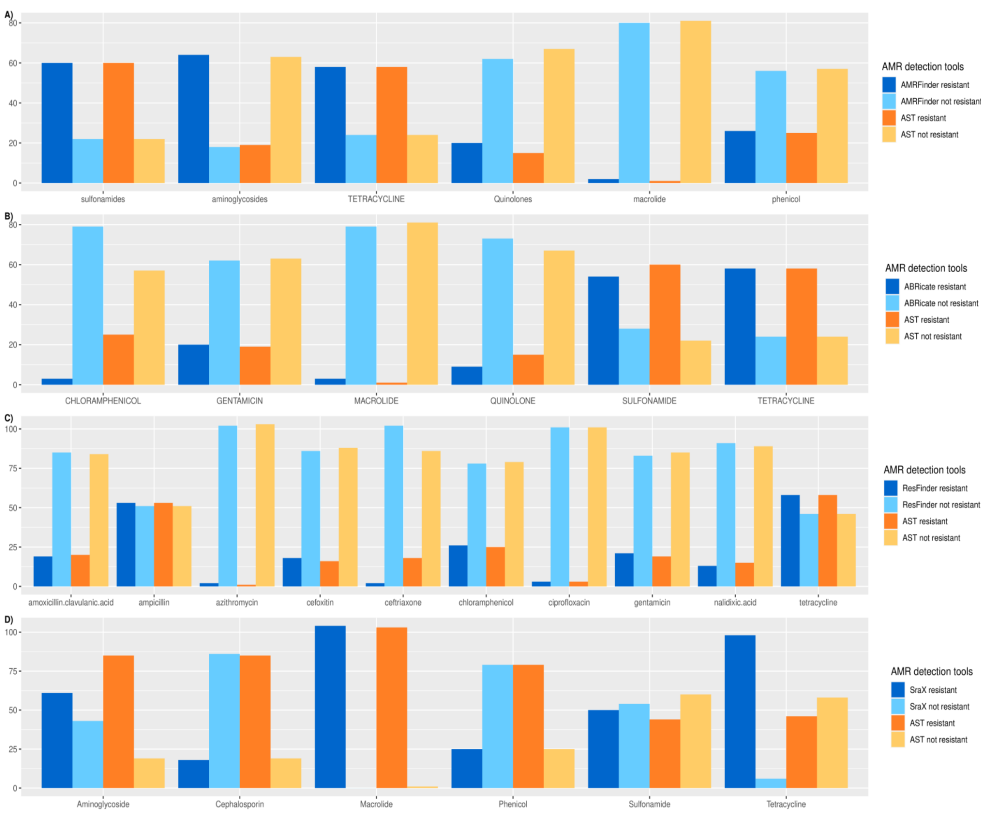
Antimicrobial resistance (AMR) is one of the ten dangers threatening our world, according to the world health organization (WHO). Nowadays, there are plenty of electronic microbial genomics and metagenomics data records that represent host-associated microbiomes. These data introduce new insights and a comprehensive understanding of the current antibiotic resistance threats and the upcoming resistance outbreak. Many bioinformatics tools have been developed to detect the AMR genes based on different annotated databases of bacterial whole genome sequences (WGS). The number and structure of
A semi-supervised learning approach for soft labeled data
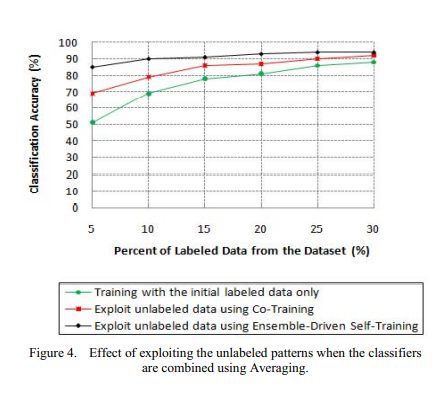
In some machine learning applications using soft labels is more useful and informative than crisp labels. Soft labels indicate the degree of membership of the training data to the given classes. Often only a small number of labeled data is available while unlabeled data is abundant. Therefore, it is important to make use of unlabeled data. In this paper we propose an approach for Fuzzy-Input Fuzzy-Output classification in which the classifier can learn with soft-labeled data and can also produce degree of belongingness to classes as an output for each pattern. Particularly, we investigate the
Strain correction in interleaved strain-encoded (SENC) cardiac MR
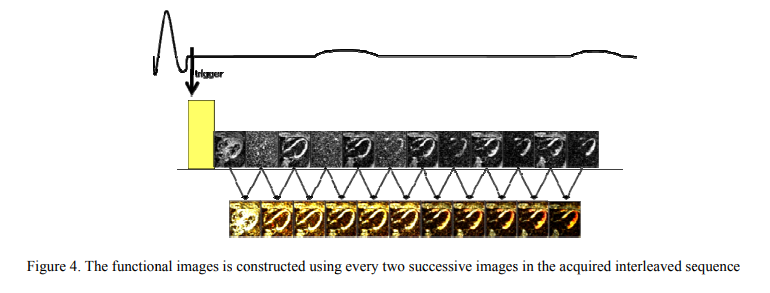
The strain encoding (SENC) technique directly encodes regional strain of the heart into the acquired MR images and produces two images with two different tunings so that longitudinal strain, on the short-axis view, or circumferential strain on the long-axis view, are measured. Interleaving acquisition is used to shorten the acquisition time of the two tuned images by 50%, but it suffers from errors in the strain calculations due to inter-tunings motion of the heart. In this work, we propose a method to correct for the inter-tunings motion by estimating the motion-induced shift in the spatial

Evaluation of the cardiac global function from tagged magnetic resonance images
Tagged Magnetic Resonance (MR) images are considered the gold standard for evaluating the cardiac regional function. Nevertheless, the low myocardium-to-blood contrast in tagged MR images prevents accurate segmentation of the myocardium, and hence, hinders the quantitative assessment of the global function of the heart. In this work, a method for enhancing the myocardium-to-blood contrast in tagged MR images is proposed. First, the tag pattern in each input tagged MR image is removed using technique based on the image texture and the frequency components of the tag pattern to produce two
Internet of Things security framework
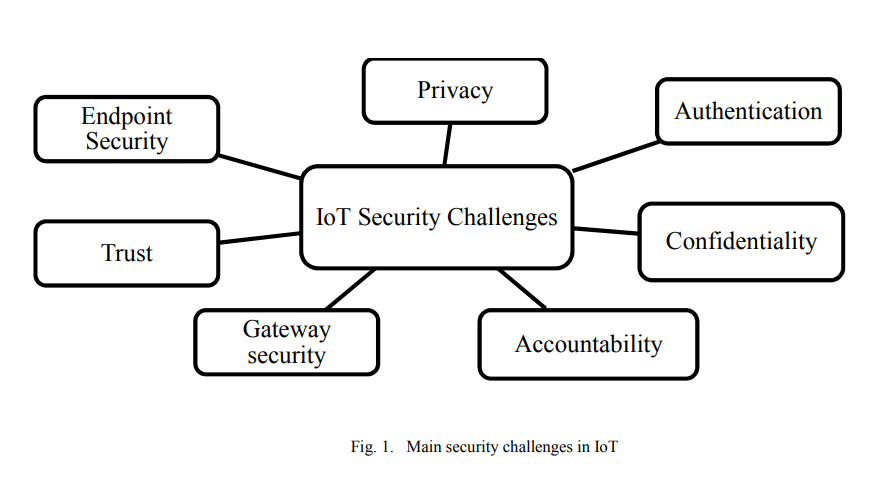
For the past decade, Internet of Things (IoT) had an important role in our lives. It connects a large number of embedded devices. These devices fulfill very difficult and complicated tasks, which facilitate our work. Till now the security of IoT faces many challenges such as privacy, authentication, confidentiality, trust, middleware security, mobile security and policy enforcement. In order to provide a secure environment for IoT, this paper proposes a framework for IoT devices. © 2017 IEEE.
GSK-RL: Adaptive Gaining-sharing Knowledge algorithm using Reinforcement Learning
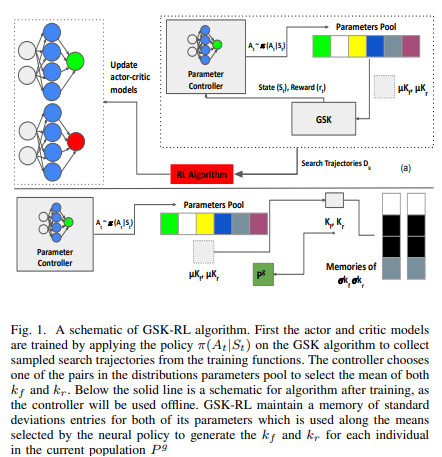
Meta-heuristics and nature inspired algorithms have been prominent solvers for highly complex, nonlinear and hard optimization problems. The Gaining-Sharing Knowledge algorithm (GSK) is a recently proposed nature-inspired algorithm, inspired by human and their tendency towards growth and gaining and sharing knowledge with others. The GSK algorithm have been applied to different optimization problems and proved robustness compared to other nature-inspired algorithms. The GSK algorithm has two main control parameters kfand kr which controls how much individuals gain and share knowledge with

WinBioinfTools: Bioinformatics tools for windows cluster
Open source bioinformatics tools running under MS Windows are rare to find, and those running underWindows HPC cluster are almost nonexisting, in spite of the fact that Windows is the most popular operating system. Therefore, we introduce WinBioinfTools, an open source toolkit containing a number of bioinformatics tools running under Windows High Performance Computing Server 2008. The current version contains three programs for biological sequence analysis: 1) CoCoNUT for pairwise genome comparison, 2) WinBLAST for biological database search, and 3) WinPSA for global pairwise sequence