

Emotions analysis of speech for call classification
Most existing research in the area of emotions recognition has focused on short segments or utterances of speech. In this paper we propose a machine learning system for classifying the overall sentiment of long conversations as being Positive or Negative. Our system has three main phases, first it divides a call into short segments, second it applies machine learning to recognize the emotion for each segment, and finally it learns a binary classifier that takes the recognized emotions of individual segments as features. We investigate different approaches for this final phase by varying how

A novel segmentation method to identify left ventricular infarction in short-axis composite strain-encoded magnetic resonance images
Composite Strain Encoding (CSENC) is a new Magnetic Resonance Imaging (MRI) technique for simultaneously acquiring cardiac functional and viability images. It combines the use of Delayed Enhancement (DE) and the Strain Encoding (SENC) imaging techniques to identify the infracted (dead) tissue and to image the myocardial deformation inside the heart muscle. In this work, a new unsupervised segmentation method is proposed to identify infarcted left ventricular tissue in the images provided by CSENC MRI. The proposed method is based on the sequential application of Bayesian classifier, Otsu's
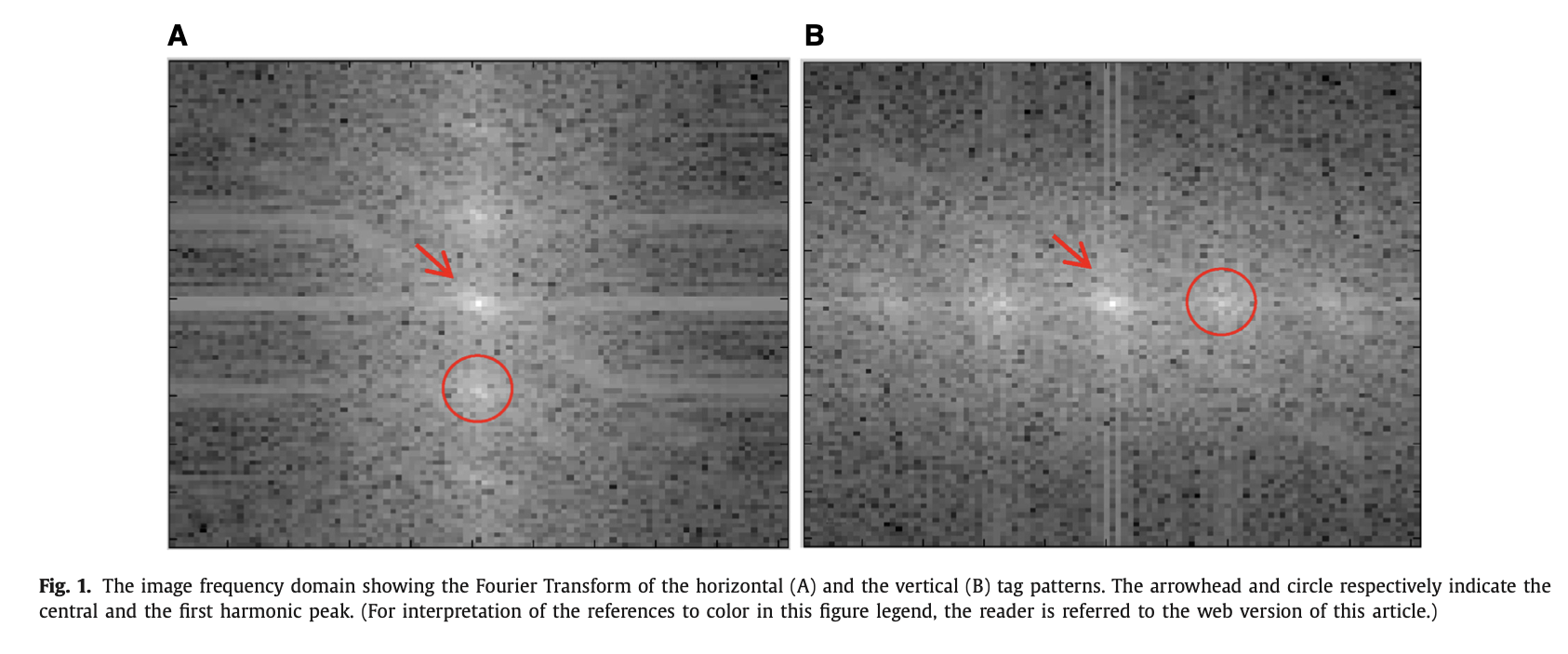
Accurate harmonic phase tracking of tagged MRI using locally-uniform myocardium displacement constraint
Harmonic phase (HARP) tracking is one of the most commonly used techniques for estimating the myocardium regional function from tagged cardiac Magnetic Resonance Imaging sequences. Nevertheless, tag fading and phase distortion can severely limit the tracking accuracy of the technique. In this work, we propose to modify the HARP tracking algorithm to impose a constraint of locally uniform displacement field while tracking the different myocardium points. A numerical contracting phantom and a dataset of 11 patients are used to study the performance of the proposed technique at the different
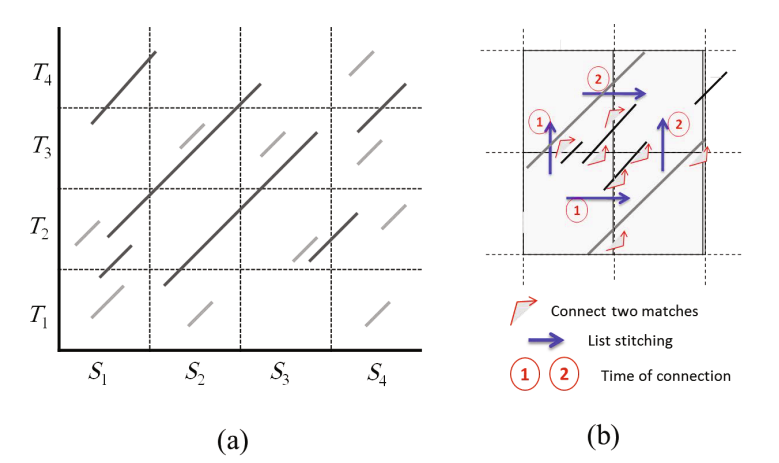
Efficient distributed computation of maximal exact matches
Given two long strings S and T, representing two genomic sequences, and given a user defined threshold ℓ, the problem of computing maximal exact matches (MEMs) is to find each triple (p 1,p 2,l) specifying two matching substrings S[p 1..p 1 + l - 1] = T[p 2..p 2 + l - 1], such that l ≥ ℓ and S[p 1 - 1] ≠ T[p 2 - 1] and S[p 1 + l] ≠ T[p 2 + l]. Computing MEMs is a major problem in bioinformitcs, because it is a primary step in identifying regions of common similarity among genomic sequences. Faster solutions to this problem are still demanded to overcome the ever increasing amount of genomic
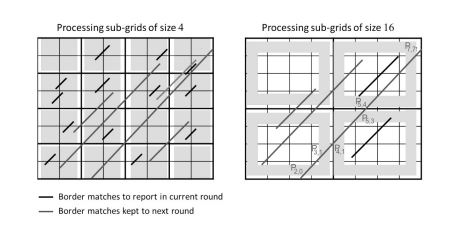
Practical distributed computation of maximal exact matches in the cloud
Computation of maximal exact matches (MEMs) is an important problem in comparing genomic sequences. Optimal sequential algorithms for computing MEMs have been already introduced and integrated in a number of software tools. To cope with large data and exploit new computing paradigms like cloud computing, it is important to develop efficient and ready-to-use solutions running on distributed parallel architecture. In a previous work, we have introduced a distributed algorithm running on a computer cluster for computing the MEMs. In this paper, we extend this work in two directions: First, we
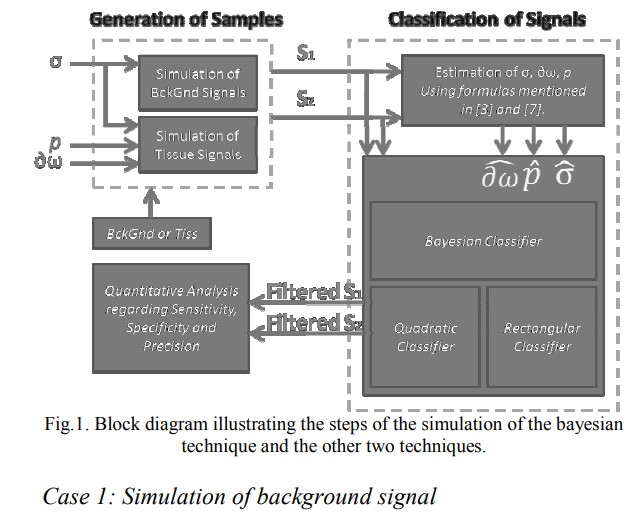
Performance evaluation of cardiac MRI image denoising techniques
Black-blood cardiac Magnetic Resonance Imaging (MRI) plays an important role in diagnosing a number of heart diseases. The technique suffers inherently from low contrast-tonoise ratio between the myocardium and the blood. In this work, we examined the performance of different classification techniques that can be used. The three techniques successfully removed the noise with different performance. Numerical simulation has been done to quantitatively evaluate the performance of each technique. © 2008 IEEE.
Emotional tone detection in Arabic tweets
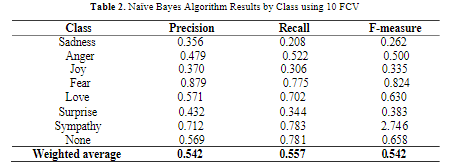
Emotion detection in Arabic text is an emerging research area, but the efforts in this new field have been hindered by the very limited availability of Arabic datasets annotated with emotions. In this paper, we review work that has been carried out in the area of emotion analysis in Arabic text. We then present an Arabic tweet dataset that we have built to serve this task. The efforts and methodologies followed to collect, clean, and annotate our dataset are described and preliminary experiments carried out on this dataset for emotion detection are presented. The results of these experiments

Using deep neural networks for extracting sentiment targets in arabic tweets
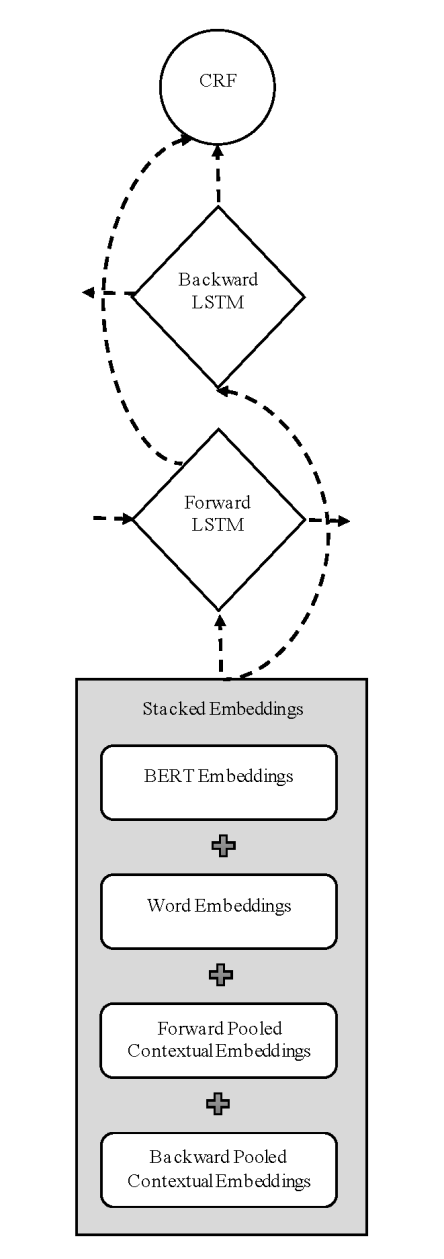
In this paper, we investigate the problem of recognizing entities which are targeted by text sentiment in Arabic tweets. To do so, we train a bidirectional LSTM deep neural network with conditional random fields as a classification layer on top of the network to discover the features of this specific set of entities and extract them from Arabic tweets. We’ve evaluated the network performance against a baseline method which makes use of a regular named entity recognizer and a sentiment analyzer. The deep neural network has shown a noticeable advantage in extracting sentiment target entities
A Multi-Embeddings Approach Coupled with Deep Learning for Arabic Named Entity Recognition
Named Entity Recognition (NER) is an important task in many natural language processing applications. There are several studies that have focused on NER for the English language. However, there are some limitations when applying the current methodologies directly on the Arabic language text. Recent studies have shown the effectiveness of pooled contextual embedding representations and significant improvements in English NER tasks. This work investigates the performance of pooled contextual embeddings and bidirectional encoder representations from Transformers (BERT) model when used for NER on
MoArLex: An Arabic Sentiment Lexicon Built Through Automatic Lexicon Expansion
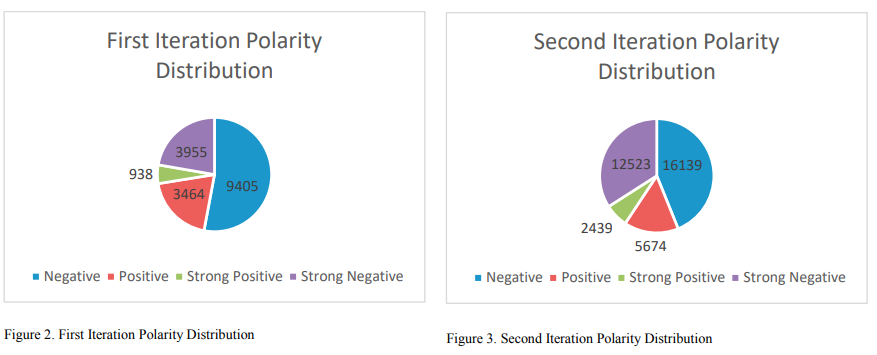
Research addressing Sentiment Analysis has witnessed great attention over the last decade especially after the huge increase in social media networks usage. Social networks like Facebook and Twitter generate an incredible amount of data on a daily basis, containing posts that discuss all kinds of different topics ranging from sports and products to politics and current events. Since data generated within these mediums is created by users from all over the world, it is multilingual in nature. Arabic is one of the important languages recently targeted by many sentiment analysis efforts. However