
Misfeasor classification and detection models using machine learning techniques
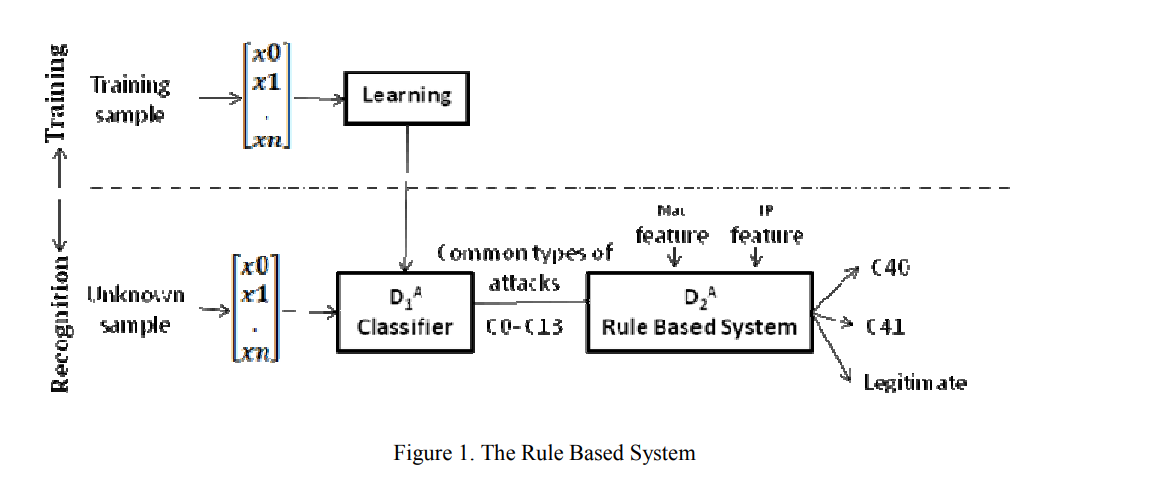
Misfeasors (or insiders) are considered among the most difficult intruders to detect due to their knowledge and authorization within the organization. Machine learning techniques have been widely used for intrusion detection but only little work has addressed the use of machine learning for detecting and classifying different types of insiders. The aim of this study is to exploit different recognition models for misfeasors detection by adding the Mac address as a feature in classification. Three different recognition models (a Rule Based Model, a Hierarchical Classification Model and a
WASP: Wireless autonomous sensor prototype for Visual Sensor Networks
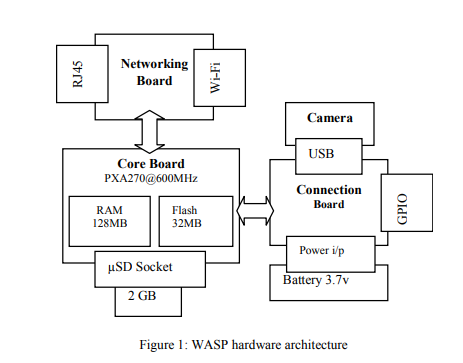
Visual Sensor Networks (VSNs) enable enhanced three-dimensional sensing of spaces and objects, and facilitate collaborative reasoning to open up a new realm of vision-based distributed smart applications including security/surveillance, healthcare delivery, traffic monitoring, just to name a few. However, such applications require sensor nodes that can efficiently process large volumes of visual information in-situ and exhibit intelligent behavior to support autonomous operation, scalability, and energy efficiency. This paper presents WASP, a vision sensor node prototype with high
An integrated multi-sensing framework for pervasive healthcare monitoring
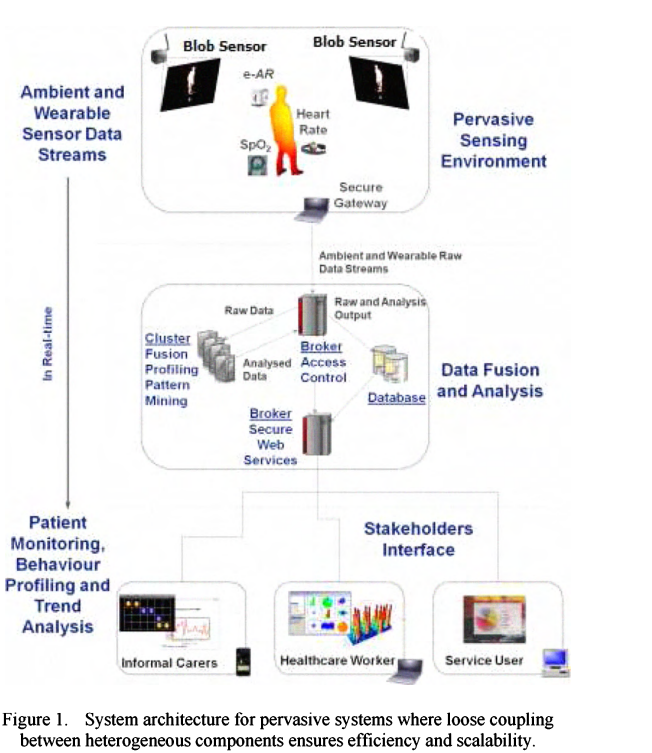
Pervasive healthcare provides an effective solution for monitoring the wellbeing of elderly, quantifying post-operative patient recovery and monitoring the progression of neurodegenerative diseases such as Parkinson's. However, developing functional pervasive systems is a complex task that entails the creation of appropriate sensing platforms, integration of versatile technologies for data stream management and development of elaborate data analysis techniques. This paper describes a complete and an integrated multi-sensing framework, with which the sensing platforms, data fusion and analysis

Ambient and wearable sensing for gait classification in pervasive healthcare environments
Pervasive healthcare environments provide an effective solution for monitoring the wellbeing of the elderly where the general trend of an increasingly ageing population has placed significant burdens on current healthcare systems. An important pervasive healthcare system functionality is patient motion analysis where gait information can be used to detect walking behavior abnormalities that may indicate the onset of adverse health problems, for quantifying post-operative recovery, and to observe the progression of neurodegenerative diseases. The development of accurate motion analysis models
Deep convolutional neural network based autonomous drone navigation
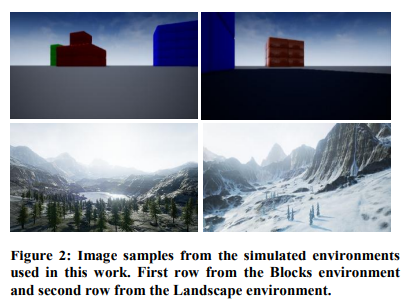
This paper presents a novel approach for aerial drone autonomous navigation along predetermined paths using only visual input form an onboard camera and without reliance on a Global Positioning System (GPS). It is based on using a deep Convolutional Neural Network (CNN) combined with a regressor to output the drone steering commands. Furthermore, multiple auxiliary navigation paths that form a â€n˜avigation envelope' are used for data augmentation to make the system adaptable to real-life deployment scenarios. The approach is suitable for automating drone navigation in applications that
Behaviorally-Based Textual Similarity Engine for Matching Job-Seekers with Jobs
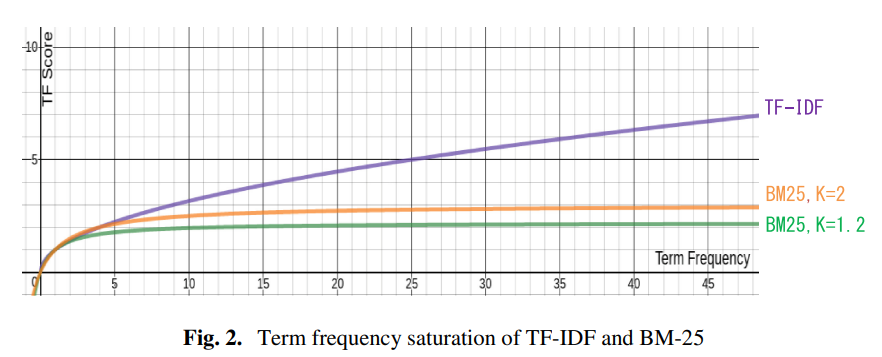
Understanding both of job-seekers and employers behavior in addition to analyzing the text of job-seekers and job profiles are two important missions for the e-recruitment industry. They are important tasks for matching job-seekers with jobs to find the top relevant suggestions for each job-seeker. Recommender systems, information retrieval and text mining are originally targeted to assist users and provide them with useful information, which makes human-computer interaction plays a fundamental role in the users’ acceptance of the produced suggestions. We introduce our intelligent framework to
Optical character recognition using deep recurrent attention model
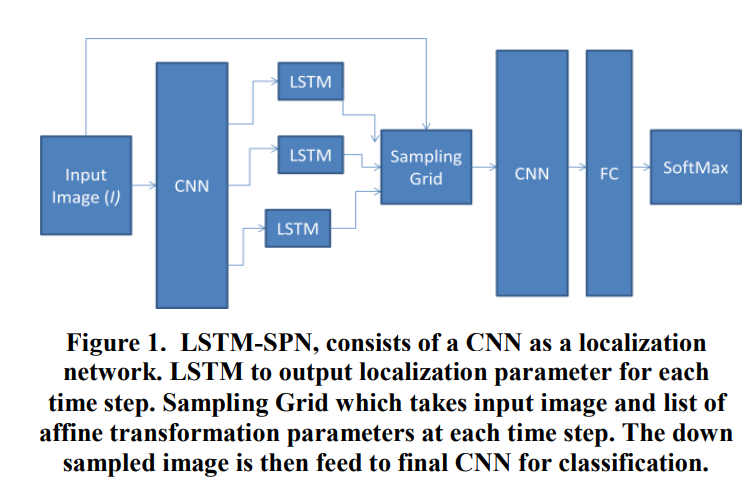
We address the problem of recognizing multi-digit numbers in optical character images. Classical approaches to solve this problem include separate localization, segmentation and recognition steps. In this paper, an integrated approach to multi-digit recognition from raw pixels to ultimate multi class labeling is proposed by using recurrent attention model based on a spatial transformer model equipped with LSTM to localize digits individually and a subsequent deep convolutional neural network for actual recognition. The proposed method is evaluated on the publicly available SVHN dataset where
Vision capabilities for a humanoid robot tutoring biology
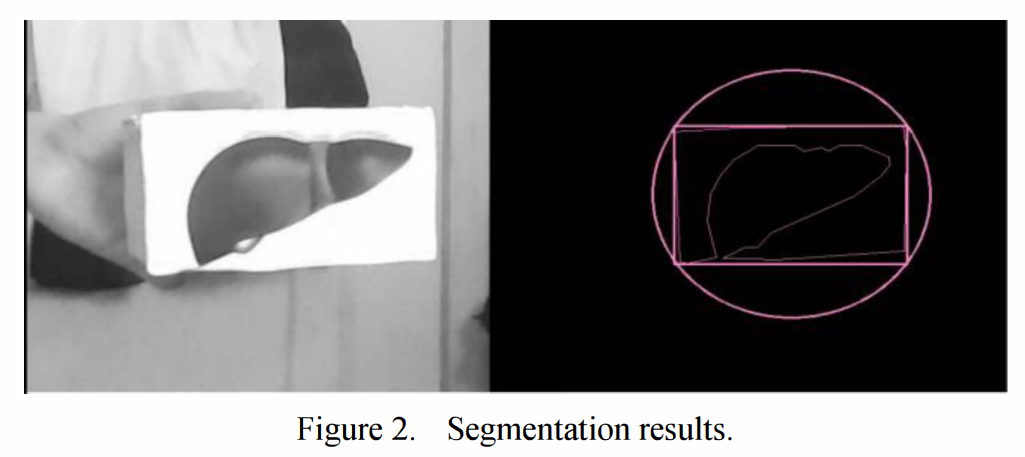
Robots are expected to be the future solution in various fields. One of these fields is education. Teachers, students and robots have to work together to make this assumption true. For this, robots must have the adequate capabilities that can help them succeed. Vision of the robot is an essential tool that the robot uses to perform several tasks. Hence, it has to be taken into consideration, the steps and the expectations for this robot vision system to surpass at least the very basic skills. Detection, recognition, and localization are the basic skills that we are implementing in our

Towards cloud customers self-monitoring and availability-monitoring
As an attractive IT environment, Cloud Computing represents a good enough paradigm which governments, national entities, small/medium/large organizations and companies want to migrate to. In fact, outsourcing IT related services to Cloud technology, needs monitoring and controlling mechanisms. However, Cloud Customers cannot fully rely on the Cloud Providers measurements, reports and figures. In this book chapter, we cover the two Cloud Computing operation sides. For the first operation side, we provide advices and guidelines for Cloud layers which can be under Cloud Customer control, to allow
Scale-adaptive object tracking with diverse ensembles
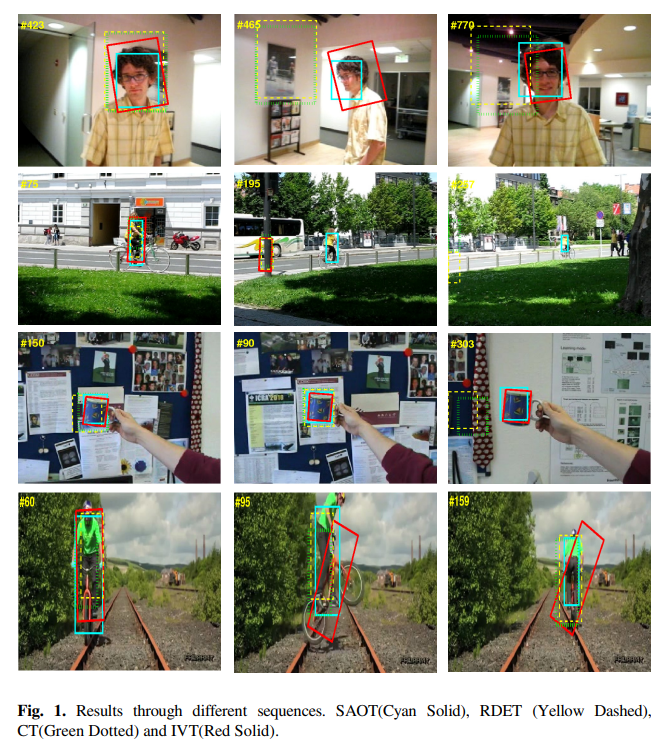
Tracking by detection techniques have recently been gaining increased attention in visual object tracking due to their promising results in applications such as robotics, surveillance, traffic monitoring, to name a few. These techniques often employ semi-supervised appearance model where a set of samples are continuously extracted around the object to train a discriminant classifier between the object and the background whereas real-time performance is attained by using reduced object representations as in the case of the compressive tracking algorithm. However, because they rely on self