
An IoT Privacy-Oriented selective disclosure credential system
Personal credentials, such as passports and drivers' licenses, can be implemented electronically using multi-show protocols. In this paper, we introduce an IoT Privacy-Oriented selective disclosure credential system, i.e. based on bilinear pairings and multilinear maps. The proposed system consists of three protocols, which allow users to be in control of their personal credentials. The Credentials Authority (CA) verifies and attests to the users credentials. Once the CA signs these credentials, the users cannot modify any of them. Moreover, the users can mask these credentials in every
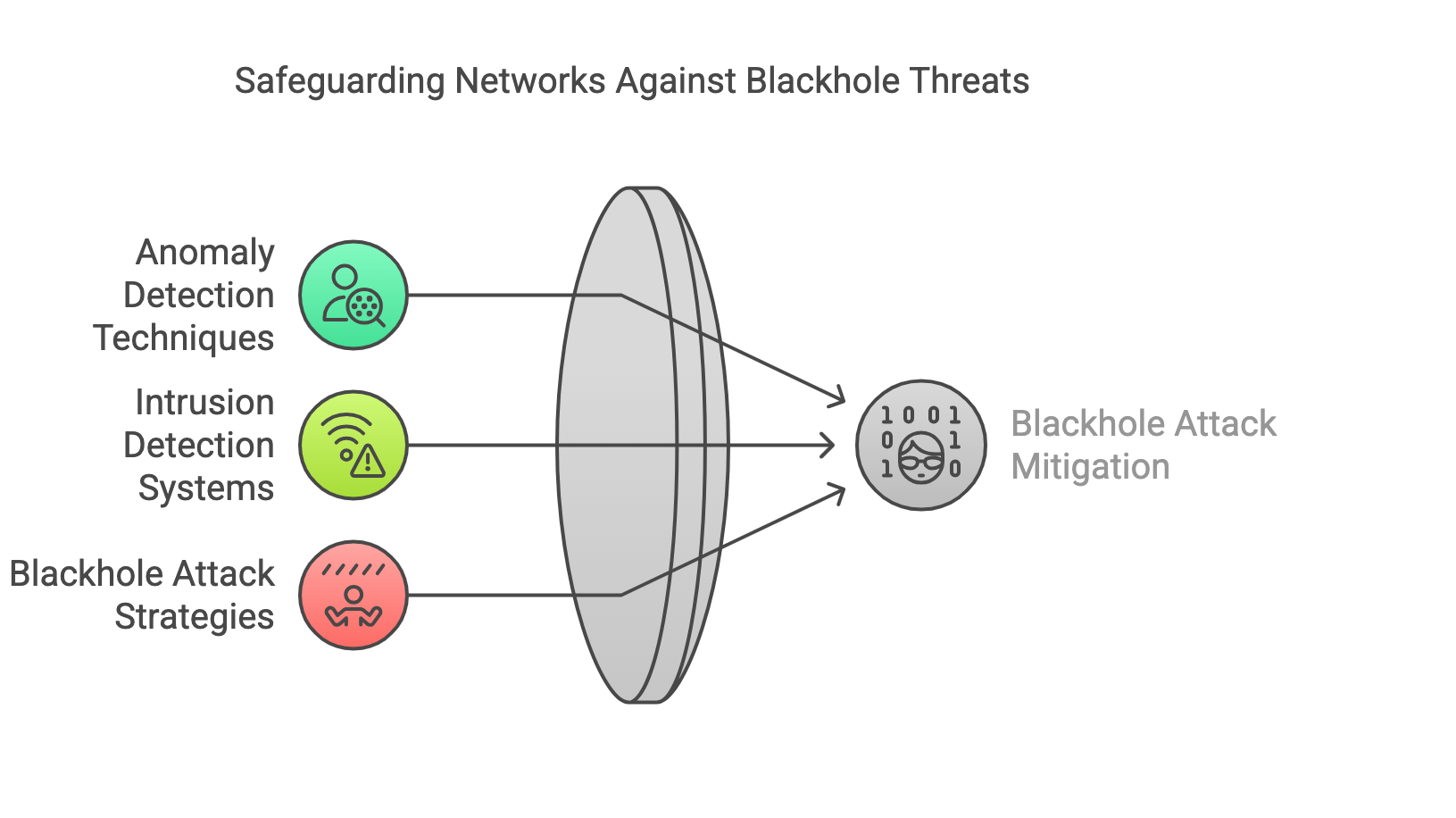
Anomaly-Based Intrusion Detection for Blackhole Attack Mitigation
In the contemporary environment, mobile ad hoc networks (MANETs) are becoming necessary. They are absolutely vital in a variety of situations where setting up a network quickly is required; however, this is infeasible due to low resources. Ad hoc networks have many applications: education, on the front lines of battle, rescue missions, etc. These networks are distinguished by high mobility and constrained compute, storage, and energy capabilities. As a result of a lack of infrastructure, they do not use communication tools related to infrastructure. Instead, these networks rely on one another
Apache Spark Powered: Enhancing Network Intrusion Detection System Using Random Forest
The increasing sophistication of cyber attacks necessitates effective intrusion detection systems. We propose a novel intrusion detection method integrating deep learning with big data management using Apache Spark. Leveraging the comprehensive CSE-CIC-IDS2018 dataset, we apply extensive data preprocessing, including handling missing and unreliable values, duplicates, and redundant columns. In addition, implementation of a Random Forest based feature importance approach is derived to prioritize the most impactful Features. Furthermore, stratified k-fold cross-validation is used for a model
Text-Independent Algorithm for Source Printer Identification Based on Ensemble Learning
Because of the widespread availability of low-cost printers and scanners, document forgery has become extremely popular. Watermarks or signatures are used to protect important papers such as certificates, passports, and identification cards. Identifying the origins of printed documents is helpful for criminal investigations and also for authenticating digital versions of a document in today’s world. Source printer identification (SPI) has become increasingly popular for identifying frauds in printed documents. This paper provides a proposed algorithm for identifying the source printer and

A Framework for Democratizing Open-Source Decision-Making using Decentralized Autonomous Organization
The open Source Software (OSS) became the backbone of the most heavily used technologies, including operating systems, cloud computing, AI, Blockchain, Bigdata Systems, IoT, and many more. Although the OSS individual contributors are the primary power for developing the OSS projects, they do not contribute to the OSS project's decisionmaking as much as their contributions in the OSS Projects development. This paper proposes a framework to democratize the OSS Project's decision-making using a blockchain-related technology called Decentralized Autonomous Organization (DAO). Using DAO

An Evaluation of Time Series-Based Modeling and Forecasting of Infectious Diseases Progression using Statistical Versus Compartmental Methods
As a case study for our research, COVID-19, that was caused by a unique coronavirus, has substantially affected the globe, not only in terms of healthcare, but also in terms of economics, education, transportation, and politics. Predicting the pandemic's course is critical to combating and tracking its spread. The objective of our study is to evaluate, optimize and fine-Tune state of the art prediction models in order to enhance its performance and to automate its function as possible. Therefore, a comparison between statistical versus compartmental methods for time series-based modeling and
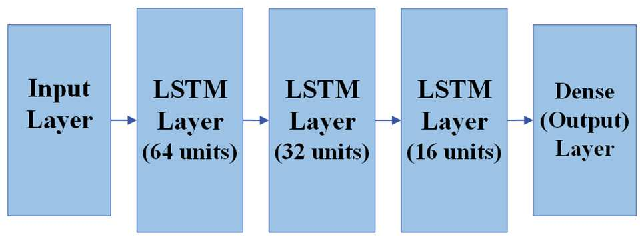
Multi-Band Radio Frequency Energy Predictor for Advanced Energy Harvesting Cellular Bands Systems
Radio Frequency (RF) energy harvesting has been employed to power wireless devices. Nevertheless, RF energy harvesting encounters restrictions regarding the quantity of power it can harvest depending on signal accessibility. As a result, accurately predicting energy levels becomes crucial for enhancing the performance of energy harvesting circuits. Most research efforts have concentrated on enhancing power harvesting policies or theoretically estimating the energy obtained through RF energy harvesting. Moreover, the existing literature has primarily focused on single-band prediction approaches
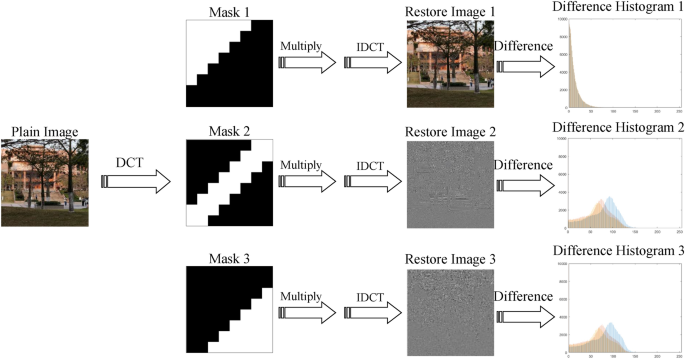
A Run-Length and Discrete Cosine Transform Based Technique for Image Splicing Detection
Digital images have emerged as the most popular means for sharing information in articles, newspapers, and even courtrooms. However, the widespread use of advanced digital imaging tools has made it easier to forge images. One such technique is image splicing, where multiple source images are merged into a single destination image to conceal or alter its content. Image splicing is an effective forgery technique, as it is difficult to detect by the naked eye. Detection of image splicing is a pattern recognition problem, based on finding image features that are sensitive to splicing. In this
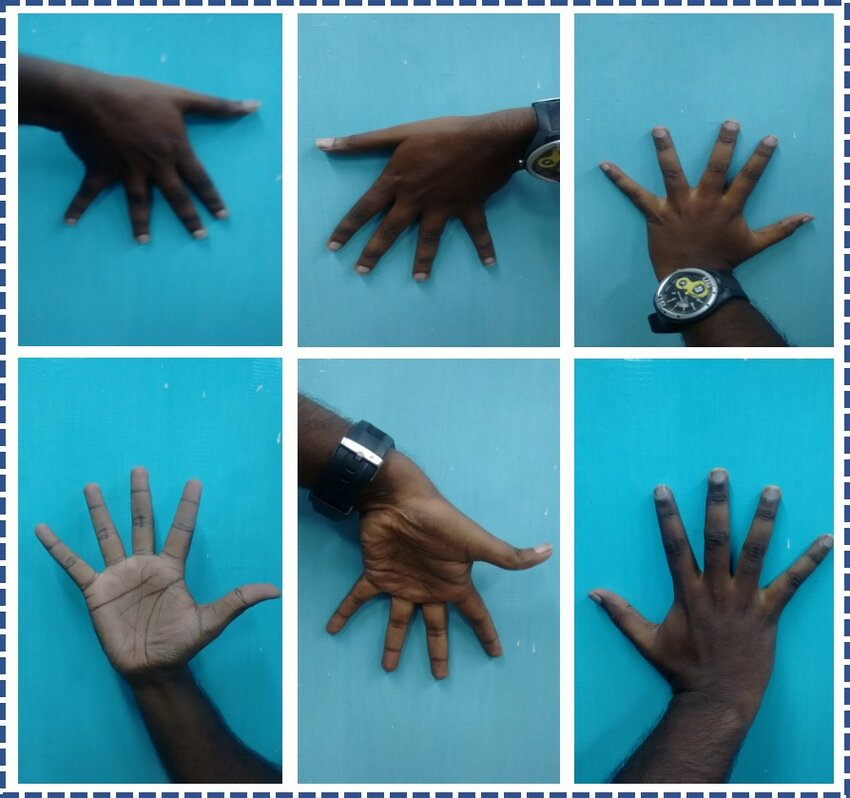
Gender Detection from Hand Palm Images: A PySpark-Driven Approach with VGG19 Feature Extraction and MLP Classification
This paper presents a comprehensive methodology for gender detection using hand palm images, leveraging image processing techniques and PySpark for scalable and efficient processing. The approach encompasses a meticulous image preprocessing pipeline, incorporating essential stages like grayscale conversion, the application ofthe Difference of Gaussians (DoG) filter, and adaptive histogram equalization. This approach not only refmes image features but also ensures scalability, accommodating large datasets seamlessly. After preprocessing of hand images, the VGG19 model is employed as a powerful
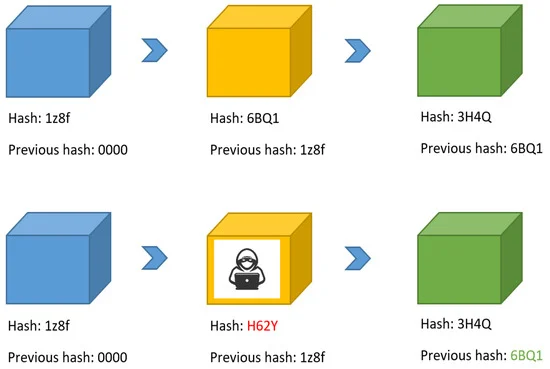
Smart Automotive Diagnostic and Performance Analysis Using Blockchain Technology
The automotive industry currently is seeking to increase remote connectivity to a vehicle, which creates a high demand to implement a secure way of connecting vehicles, as well as verifying and storing their data in a trusted way. Furthermore, much information must be leaked in order to correctly diagnose the vehicle and determine when or how to remotely update it. In this context, we propose a Blockchain-based, fully automated remote vehicle diagnosis system. The proposed system provides a secure and trusted way of storing and verifying vehicle data and analyzing their performance in